Iconic musical instruments and the players behind them.

Django Reinhardt and the Selmer Maccaferri
“Listen to this, it speaks like a cathedral!"~Django Reinhardt on his Selmer Maccaferri
One of the most loved, influential, and stylistic original Guitarists of all time, Romani Gypsey, Django Reinhardt migrated to France by his teen years. Together with the extraordinary Jazz violinist, Stephan Grappelli, and his Paris-based Quintet “du Hot Club de France.” Django’s extraordinary fusion of Romani musical styles and American Jazz soon made him an internationally celebrated guitarist, despite an accident that left his fretting hand badly damaged. The accident left him without the use of his pinky and ring finger, forcing him to reinvent his technique using only his thumb and two fingers. Undoubtedly, this is a major contributing factor to his sound. Unquestionably, so is the unique-looking and sounding Selmer Maccaferri, famously associated with him.
After adapting American-style jazz to his sound, Django transitioned from the more common traditional gut-string guitars to the powerful Selmer steel-string "grande bouche" (large sound hole) model. Selmer’s unique construction not only provided enough power for soloing with his ensemble but also offered a kind of articulation Django could exploit to his advantage.
The Selmer Maccaferri Guitar itself is a quality instrument, but not quite as advanced as its American counterparts. Utilizing a nearly flat, ladder-braced spruce top with a cutaway, the Selmer Maccaferri projects similarly to the American Flattop. The strings pass over a tall bridge and tie off to a trapeze tail piece, rather than a laminated bridge with pins. This design produces a snappy percussive attack, like an American Jazz Box.
Since Django’s untimely death in 1953, Django’s brand of Gypsy Jazz has been cited as influential by an impressive list of luminaries, including Chet Atkins, Les Paul, Jimi Hendrix, John Jorgenson, and many more. Long after the Selmer Maccaferri went out of production, a wide range of manufacturers and independent builders continue to offer the Selmer-style guitar for players seeking the most authentic Django sound.

Paul McCartney and the Hofner 500/1 “Violin Bass.”
t’d be hard to find a more popular artist who’s so closely associated with his instrument, as Paul McCartney, and the Hofner 500/1. It seems this famous pairing was the hand of fate, more so than anything else. Paul’s 65-year (and counting) relationship with the Hofner bass began when he transitioned from guitar to bass during the Beatles' pre-fame residency in Hamburg. Paul’s first choice was a Fender Bass, but they were too pricey and hard to come by in early 60s Europe. By comparison, the Hofner was affordable, and with a short wait, available in lefty.
This 1961 accusation will become world-famous as “The Cavern Bass.” It’s this Hofner that McCartney will use for every concert and recording done during the Beatles' transition from bar band to global phenomenon. Notoriously fragile, McCartney sent the bass out for an overhaul and acquired a new 1963 Hofner (known as the Shea Bass). The refurbished “Cavern Bass” became Paul’s backup, while the new Hofner will become his main touring and recording bass, for the majority of his work, during and after the Beatles years.
The Hofner 500/1 “Violin” or, thanks to Paul, “the Beatles Bass” is a bit of an oddball compared to most modern bass guitars. First available in 1956, the 500/1 has a short 30” scale length, and completely hollow construction, giving it a fast and wieldy feel. Unlike the sturdy, solid, and bright Fender bass, the Hofner produces a deep, warm tone, and “thuddy” response, reminiscent of a standup bass. McCartney often used this sound to his advantage, playing with a pick and using the neck pickup and tone control.
Around the time of the “Rubber Soul” LP, Paul started experimenting with a Rickenbacker 4001. He added a Fender bass to his collection for the White Album sessions, before revisiting his original 1961 Hofner “Cavern bass” for Let it Be. Unfortunately, that’s the last time Paul saw the bass for nearly 50 years.
Except for the Custom “Union Jack” Hofner he famously used for the Queen's Diamond Jubilee performance, McCartney has never been seen in public with any Hofner other than one of his two originals. This only adds to the legendary status of Paul’s heavily relied-on 1963 Hofner, which has become an icon and is among the most important pieces of rock history. As such, it’s estimated to be worth well over 20 million dollars to a collector, making it the most valuable instrument ever made.
Paul is still actively recording and touring with his world-famous bass, but he’s taking no unnecessary risks. These days, Paul’s beloved 1963 Hofner 500/1 travels with its own armed security detail. And of his “missing” 1961 Carven Bass? In 2023, the fan-based “Lost Bass Project” successfully located the missing bass, reuniting it with the instrument for the first time since “Let It Be.” The entire process is chronicled in the 2026 BBC documentary McCartney: The Hunt for the Lost Bass.

Willie Nelson – and "Trigger."
“We're both pretty old, got a few scars here and there, but we still manage to make a sound every now and then" ~Willy Nelson.
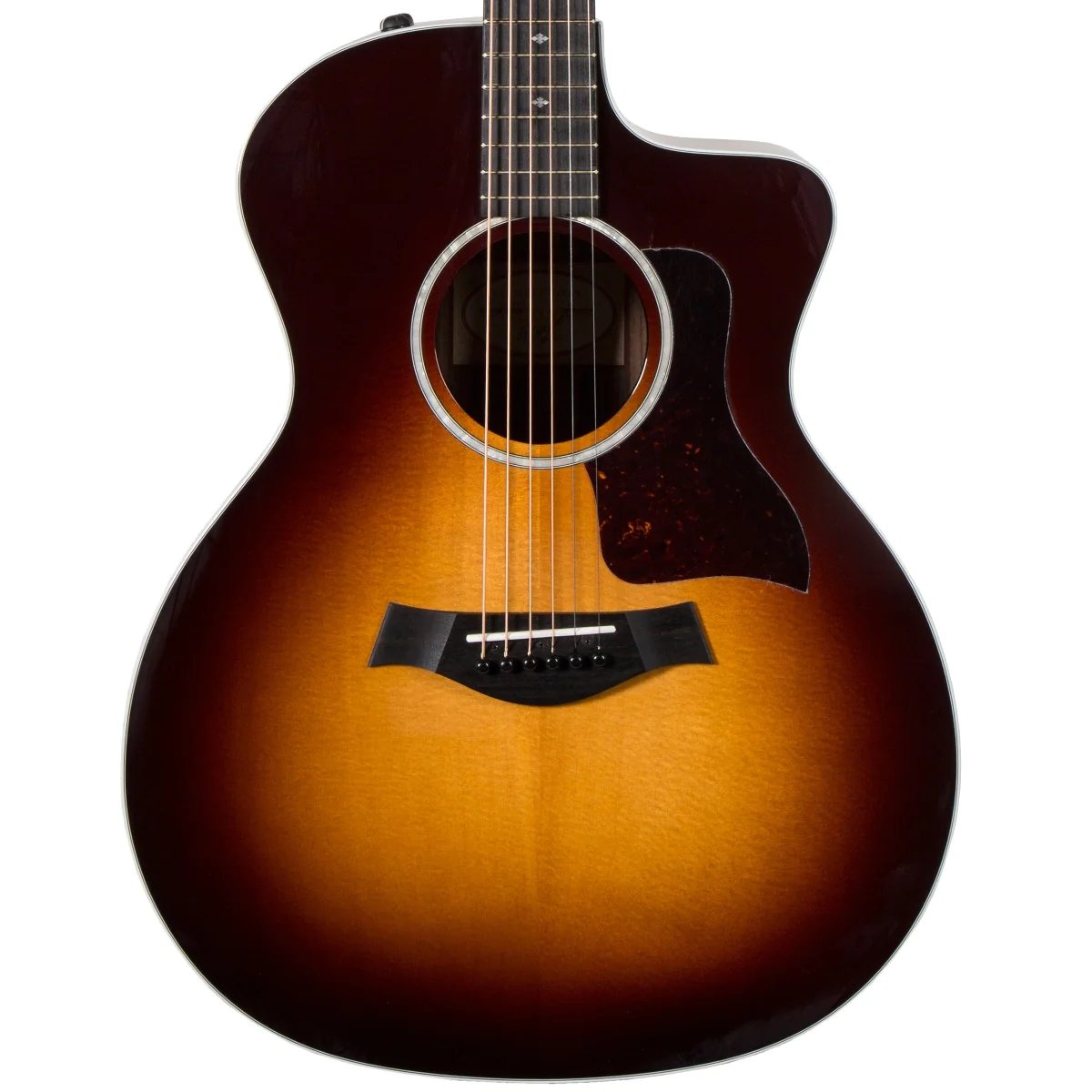
Unlike most Country, Folk, or Rock players, Willy Nelson’s signature sound revolves around his nylon-string “Spanish” guitar. Like many close relationships, the tail of Willie Nelson’s famous bond with his Martin N-20 (AKA “Trigger”) begins as another one ends. The story begins at a 1969 performance, when a drunk fan stepped on the electrified nylon-string Baldwin 800C Nelson had come to rely on. Acoustically, there was nothing “standout” about the guitar, but it did offer something no other guitar of the era had going for it. The 800c was renowned for its Prismatone piezo saddle pickup- the first of its kind to produce a natural acoustic sound when amplified, and essential for live performance with a band.
Although the Baldwin guitar was damaged beyond repair, the unique pickup system was salvageable. For approximately $4,000 in today’s money, Nelson had the Baldwin’s Prismatone pickup installed in a brand-new Martin D-20, bought sight unseen over the phone.
The C.F. Martin N-20, a nylon-string classical/Spanish-style guitar that’s become nearly as famous as its owner, is an unusual model, coming from the company that revolutionized the steel-string flattop. Willy’s instrument was made in 1969 and features a classical-size rosewood body, a 25.9” scale, and a spruce top, fan-braced for nylon strings. The guitar has a harmonically rich tone and a snappy attack with a fast decay, which Nelson felt was the closest way to emulate the sound of his hero, Django Reinhardt. It will be the last guitar Nelson will ever need.
Although the Martin N-20 is built to last a lifetime, very few musicians have put that to the test as Willy Nelson has. With a career spanning 7 decades and still actively touring at 92, Willy and “Trigger” are estimated to have performed over 8,000 shows together. The effects of which are famously evident on the battered Martin guitar, long missing a significant portion of the soundboard in the picking-hand area and sporting a deeply devoted fingerboard. Although the guitar is in desperate need of an overhaul, including a new soundboard, Nelson does not want the guitar altered. Instead, the guitar has been fortified where the old braces have given out, and parts like tuners and the preamp are replaced only when necessary to maintain originality while keeping the guitar functional. Willy Nelson asserts that he will continue to perform only as long as his beloved guitar remains playable. Thankfully, Willy’s techs have managed to keep the historic guitar in performance condition, and it will hopefully remain that way for years to come.

Keith Moon and the “Pictures of Lillie” Drum Set
Not all famous players and instruments are guitar players and guitars, but each is certainly made of the same stuff. However, you’d be hard-pressed to find someone, or something, cut from the same cloth as the outrageous “Moon the Loon.” As the driving force behind “The Who’s” frenetic and sometimes literally “explosive” sonic assault, Keith Moon is one of the most colorful characters in the pantheon of Rock musicians.
Unlike most musicians, who typically form a sentimental bond with their favorite instruments that lies somewhere between love and reverence--“The Who” are notorious for the creative ways they show disdain for their gear. Band leader Pete Townshend, who’s personally pulverized hundreds of guitars on stage, is outspoken on the subject:
“I don’t have a relationship with the guitar, it’s just a tool--They become incredibly valuable because they’re old or collectible, and rich people will pay huge sums for them--but they’re still just a slab of wood with strings.”
Even the band's stoic guitar-collecting bassist, John Entwistle, managed to smash a few guitars in his day. Never to be outdone, Keith Moon turned his fun-loving nihilism and practical jokes, particularly when they involved destruction, into an art form.
In early 1967, Keith Moon commissioned Premier Drums to build 3 identical, highly elaborate custom drum sets. The 8-piece (plus snare) specially reinforced birch kits featured 3 rack toms, 3 floor toms, and a double bass drum setup that required several outsourced hardware parts to make it all work. Each drum featured custom artwork, including the band logo, Union Jacks, op art design reading ‘Keith Moon’s Patent – Britain’s exploding drummer', and images of “postcard girl” Lillie Langtry. The artwork was done in recently available Day-Glo paint and hand-applied to each shell. The over-the-top kit reportedly cost $5,000 each in 1967 (that’s nearly $50k in 2006 dollars) and took 5 artisans 6 months to complete.
In August of 1967, an excited Keith Moon announced the new kit in a feature for the UK’s “Go” magazine, promising he would take them on the road for the upcoming tour of the USA. On the subject of destroying drum kits? “I’m afraid those days are gone forever.” On September 15, 1967, the Who made their American television debut on the edgy “Smothers Brothers” variety show. At the end of “My Generation,” all eyes were on Pete Townshend as he began to smash his Vox guitar when the explosive charge inside Moon’s Pictures of Lillie graphic bass drum went off, like a bomb. Loaded with three times the safe amount of powder, the report temporarily defended an unsuspecting Pete Townshend and sent bits of shrapnel flying all over the TV studio.
All 3 of the original “Pictures of Lillie” kits were damaged beyond repair within a year and a half. Today, all that remains of the kit is a floor tom on display at the Rock ‘n Roll Hall of Fame, and 3 rack toms located at the Victoria and Albert Museum in London.